
I usually don't like new tech regulations.
One reason is that tech changes so fast that new regulations tend to protect yesterday from last Thursday.
Another reason is that lawmakers tend to know little or noting about tech. One former high U.S. government official once told a small group of us, roughly, "There are two things almost nobody in Congress understands. One is technology and the other is economics. So good luck."
Still, I had high hopes for the GDPR (the EU's General Data Protection Regulation), which famously went into effect one year ago. I even suggested that we re-brand 25 May "Privmas Day" (hashtag #privmas) since I expected the GDPR would go far toward protecting personal privacy online, which prior to that date had been approximately nil. I even published, here in Linux Journal, what I called an FUQ for the GDPR.
That FUQ (the U meaning "Unanswered") provided guidance toward new developments that could give each of us many new forms of agency online, as well as some privacy. I really did expect the GDPR to encourage both.
Alas, mostly it hasn't. Worse, it has had many other effects, including these:
Which brings us to the biggest problem with the GDPR: as the New Context for privacy, it puts blinders on nearly everyone's vision of what privacy is and what can be done to create it for individuals in the digital world. Simply put, if you want to talk privacy, ya gotta talk GDPR. And that means assuming that personal privacy is entirely a grace of what others don't do to us, rather than what we can do for ourselves. This is a very blindered view: one that locks everybody into thinking about how to protect 2015 from 2012. Worse, as I put it back in January, If your privacy is in the hands of others alone, you don't have any.
Fortunately, we have to wear the GDPR's blinders.
For example, if you're not spying on people, don't bother with a cookie notice. They're all roughly the same as putting one of these on your house:
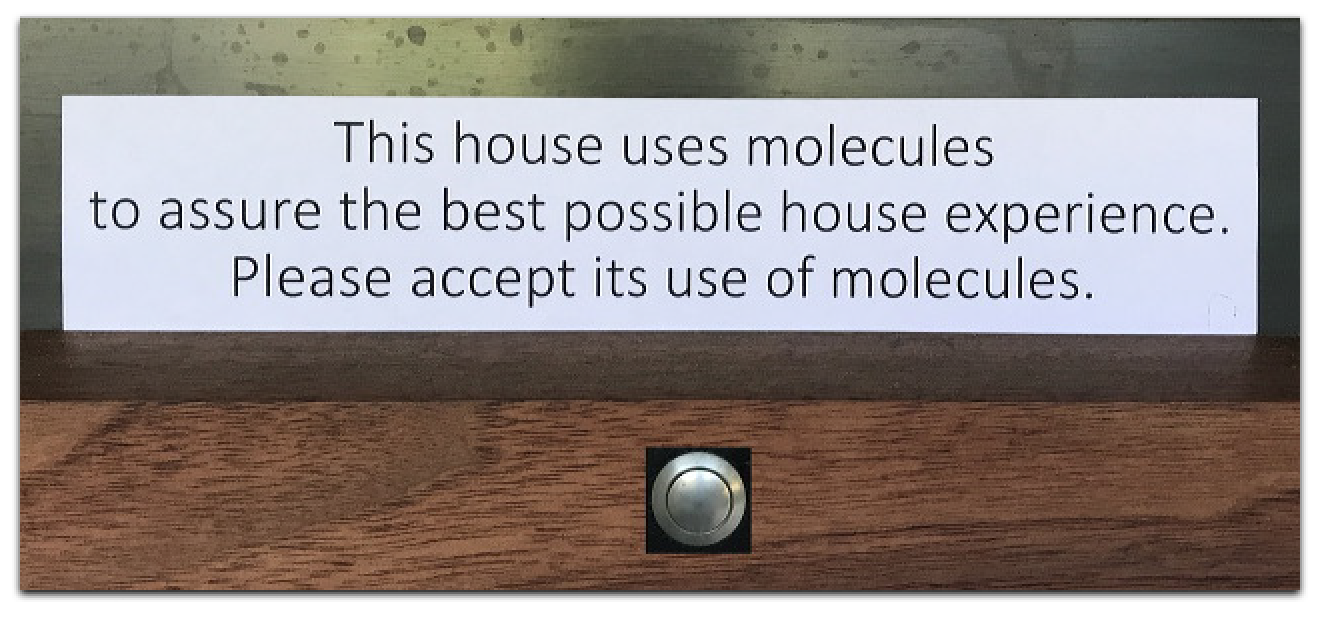
And start working on stuff that increases not only our privacy online, but our agency: the ability to get things done. New things. Better things. There's a good list in An FUQ for the GDPR, and a continuously updated one in this punch list at ProjectVRM, which I run.
Meanwhile, we're not going to stop the lawmaking. So let's also think about what kind of laws and regulations we actually want, and how those might encourage useful developments for each of us, personally.